• Electrical Safety

    Staying Safe with Electricity at Home

What are your responsibilities as a tenant?

We use electricity throughout the house and during the whole day. As a result, we sometimes forget how powerful and dangerous it can be.

Every year, over half of all accidental domestic fires in the UK are caused by electricity. Most of these are caused by electrical products, either through misuse or faults. Over half of these electrical fires start in the kitchen, with cooking appliances and white goods (such as fridges or washing machines) being the main cause.

It’s important to understand the risks to avoid any danger to you or your loved ones.

We’ve put together some advice to help you keep your home and loved ones safe.

Home Electrics

As a tenant, it’s your responsibility to report any electrical problems to us as soon as they appear.

To help you to carry out basic visual checks in your rented home, download the free Home Electrical Safety Checks smartphone app, available for iPhone and Android: www.electricalsafetyfirst.org.uk/visualchecks

You should never try to carry out your own electrical repairs.

If you’ve reported a problem to us but the repair hasn’t been made yet, please contact us again.

Electrical items

You’re also responsible for maintaining any electrical items you bring into the house.

If you’ve bought any electrical products for use in your rented home – whether it’s a large item like a fridge or TV, or something smaller like a kettle or hairdryer – make sure you register the appliance with the manufacturer.

This means that if there’s a problem and the item needs to be recalled, the manufacturer will be able to contact you. Most recalls on electrical products are due to a risk of fire or electric shock, so registering will give you the peace of mind that you’re keeping your family and your home safe.

Top tips on staying safe in your home whilst using electrical appliances.

Staying safe in the kitchen

More than half of all accidental house fires start in the kitchen. Government statistics show that most accidental fires caused by electricity in the home happen because people misusing electrical cooking appliances, including microwaves.

Take special care when using electrical appliances. The mixture of water, hot surfaces, flexible cables and electricity in the kitchen can be very dangerous.

You can take simple steps to minimise the risk of fire or electric shock when using appliances such as washing machines, tumble dryers, fridge-freezers and dishwashers:

  • Always buy from a retailer you can trust and follow the manufacturer’s instructions when installing, using and maintaining electrical appliances.
  • Don’t leave washing machines, tumble dryers or dishwashers running overnight or when you’re not at home.
  • Always register your electrical appliances so the manufacturer can contact you if there’s a problem.
Don’t place a fridge or freezer near a cooker, radiator or in direct sunlight, as it will have to work harder to maintain the right internal temperature.

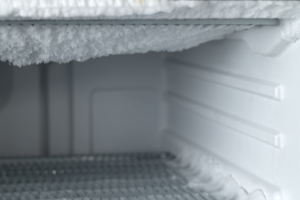
Defrost your fridge and freezer at least once a year to ensure these appliances continue to work properly.

Clean behind your fridge and freezer regularly to keep lint and dust from building up, and make sure there’s enough room behind the appliance for air to circulate freely.
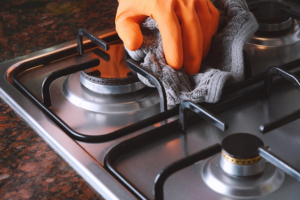
Clean your oven and hob regularly and always clear spillages immediately to avoid a build-up of food debris and fat, which can cause a fire risk.
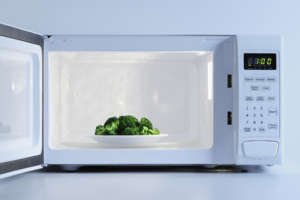
Only use your microwave for food. Always follow the instructions on the packaging, and only put plates, dishes or containers in the microwave if they’re clearly marked as microwave safe.

Avoid storing objects on top of appliances like the microwave, which can block ventilation.

Don’t overload washing machines or tumble dryers: take bulky items like duvets to the dry cleaners.

Never try to get toast that is stuck out of a toaster while it is plugged in. Use a wood or plastic utensil, not a metal knife, as there are often live parts inside.

Check that appliances such as kettles and toasters are in good condition, including their leads.

Don’t wrap a flexible cables, like those on a kettle or toaster, around the small appliance while it is still warm.

Keep your appliances clean, and unplug them before cleaning them.
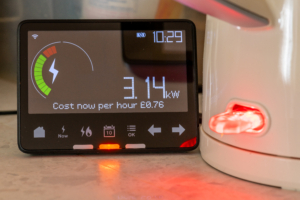
If your appliance begins making a strange noise or isn’t working properly, always unplug it and contact the manufacturer or a qualified repair technician.

If your washing machine or dryer is leaking. Fix it quickly — even small leaks can create excess moisture that encourages damp and mould to grow. Check hoses, seals, and filters regularly, and wipe up any standing water immediately. If you can’t repair it right away, avoid running the appliance until it’s fixed, and keep the laundry area well-ventilated.

Safety in the bathroom

If water and electricity mix, the result can be deadly. So, the bathroom is possibly the most dangerous room in the house when it comes to electrical safety. An electric shock can be far more severe in a bathroom or shower room as wet skin reduces the body’s resistance to electricity.

  • Use an electrician registered with a government-approved scheme to carry out any electrical installation work that falls outside of our obligation.
  • Sockets are not allowed in bathrooms or shower rooms (apart from shaver-supply units) unless they can be fitted at least three metres from the bath or shower.
  • Electrical shaver points must be a safe distance (in meters) from the bath or shower to avoid splashes.
  • Choose enclosed ceiling lights rather than pendant lights that hang down. Any light fittings that aren’t enclosed should be out of reach of someone using, or still wet from using, the bath or shower.
  • Everyday light switches can be a danger because of dampness and wet hands. A ceiling-mounted pull-cord switch is the safest option.
  • Central heating is the safest way to keep a bathroom warm.
  • An electric shower must be supplied on its own circuit directly from your fuse box.
  • Never bring mains-powered portable appliances such as hairdryers, heaters or radios into a bathroom. You could be severely injured or killed.

Maintenance of your bathroom extractor fan

Bathroom extractor fans are designed to remove moisture and other dirty air from your bathroom. However, as they do this, they come into to contact with dust, floating fibres and other airborne items such as insects and hair which, over time, will clog up your fan’s air intake. Eventually this can cause the vents to become blocked or even stop the blades from rotating. A partially blocked fan won’t be able to extract properly, resulting in moisture and dirty air circulating your bathroom.

A blocked fan will overheat causing the back-up thermal cut-out to operate. A blocked or partially blocked fan will also consume more power and create more noise. The resulting increase in bathroom moisture will increase dampness and may promote the growth of mould; this damp and mould can then spread into adjacent rooms or through the floor to the ceiling below.

Any extractor fan can have a build-up of dust and grime that impacts both power consumption and performance, so it’s important to maintain your extractor fan using the guidelines below:

  1. Switch off the power and turn the fan off at the isolation switch. If you have an older installation without a separate isolator, turn the power off at the consumer unit. Don’t rely on the light switch when working on your fan: most bathroom fans have a separate supply which bypasses the light switch for the overrun timer or humidity sensor, so it could still be live even if the light switch is off.
  2. Always consult the instruction manual for your specific fan, if you have it. If not, you may be able to obtain a copy online, so check the manufacturers website.
  3. You may need to stand on a ladder to reach the fan safely. Make sure your ladder is in good condition, and is positioned safely. You may need to ask someone else to hold it steady for you.
  4. Wear gloves, a dust mask and eye protection.
  5. Use a damp cloth to carefully clean away dust and grime without removing any covers, unless advised by the manufacturer that it’s safe to do so. An old toothbrush is also a handy tool if the dust is stubborn.
  6. Dust inside the unit and the vent pipe. You can use a combination of a duster and vacuum cleaner. For stubborn dust, a nylon bottle cleaning brush may help.
  7. Let the fan cover dry out completely before turning the power supply back on.

Electrical safety after a flood

If your home has been affected by flooding, there could be damage to the electrics in your property. Before you move back in, follow these steps to stay safe.

Do

  • Make sure the property is safe before you enter.
  • Try to avoid direct contact with any water which remains as it may be contaminated.
  • Take a torch when entering the property.
  • Switch off the electricity supply at the fuse box if it is safe to do so. If there is evidence of water inside the fuse box or if there are signs of arcing or overheating, seek professional advice.
  • Unplug damaged electrical appliances and move all portable ones away from the area affected by flooding.
  • Arrange for other services, such as gas, to be switched off. Electricity and gas supplies should not be turned back on until you have had professional advice that it is safe to do so.

Don’t

  • Use candles to guide you when entering the property.
  • Use any mains powered electrical appliances in areas affected by flooding until advised by a registered electrician that it’s safe to do so.
  • Go near any exposed wiring. It may still be live.
  • Start to clean up or carry out repairs until you’re sure it’s safe to do so.

Cleaning up and making repairs

  • Contact your insurance company and our customer contact team for advice, and to get approval to carry out any repairs. Take photos of the damage and keep records.
  • We will organise for a registered electrician to assess the condition and damage to electrical wiring, equipment and appliances that have been affected by the flood.
  • Do not attempt any electrical repairs or connection of temporary supplies yourself – always use a registered electrician.
  • All portable appliances affected by the flood will need to be tested to make sure they’re safe for continued use, as well as fixed equipment such as electric cookers. However, the Portable Appliance Test (PAT) alone will not confirm that flood damaged appliances are safe to use. Contact the manufacturer to check how much inspection and testing is necessary.
  • If the water damage to electrics is relatively minor and caused by clean water, i.e. a burst water pipe or tank, then it is likely that the registered electrician will just dry out cables and replace any accessories affected by the water (sockets, switches, plugs etc.)
  • If there is major flood damage to the electrics caused by clean or contaminated water, then it is likely that parts of the electrical installation will need to be rewired.

Report a leak by contacting the repair team on 

Customers living in a Linc home

0800 072 0966

Customers living in a Pobl home

0330 175 9726

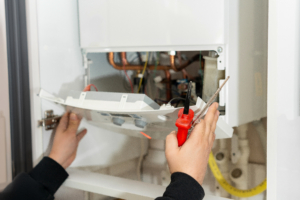
Boiler maintenance

We service the boiler in your home every year. If you’re concerned about your boiler or need to request a repair, please contact the repair team.

If you need to report a problem, please call the contact centre.

If you need any further information on plumbing and water, please call your neighbourhood officer who will be happy to help.

What to do about mould in your home

If you already have mould in your home, it’s important to treat it.

Use a product designed to clean mould to wipe it away. These are widely available from supermarkets or online.

Don’t brush or hoover the mould as this can spread the spores into the air in your home, which can be unhealthy.

Once you’ve removed the mould, keep the room well-ventilated so the area can dry fully and the mould won’t come back.

If you’ve tried all our top tips and you’re still having problems with damp and mould, please get in touch with us.

A member of our maintenance team will work with you to work out what’s causing the problem and help fix it.

Reporting mould in your home

If you’ve tried our top tips to reduce the moisture in your home but you’re still having problems with damp and mould, please get in touch with us.

You can contact us via email, phone, or social media, and a member of our customer services team will speak with you to better understand the issues.

They’ll ask you a few questions to find out which room in your home has damp or mould, and which part of the room is affected – perhaps it’s the wall or the ceiling, for example. They’ll ask whether mould is growing, and if the area feels wet or dry to touch.

They may also ask you to send us some photos, if you can.

Finally, they’ll ask you about any steps you’ve taken to remove the mould and reduce the moisture in your home.

Once they’ve got all this information, they’ll let you know what steps we’ll take next.

If the damp and mould in your home are not improved by following our top tips, we’ll arrange for one of our experienced surveyors to visit your home.

They’ll work alongside you to make sure your home is a comfortable and healthy place for you to live. 

Feel free to reach out to us

For customers living in a Pobl home:

Tel: 0330 175 9726
Email: info@codigroup.co.uk

For customers living in a Linc home:

Tel: 0800 072 0966
Email: contact.centre@codigroup.co.uk

If you have any concerns about your home based on the advice topics we support on our website. We’re here to help!